Remember the last time you reached for a new product at the grocery store? Maybe a colorful box caught your eye (or the eye of a youngster accompanying you on your shopping trip). Maybe you were drawn in by easy-to-read nutritional information and the promise of clean ingredients. Either way, packaging matters. It’s the first point of contact between product and consumer, capable of grabbing shoppers’ attention on crowded shelves and communicating brand identity with a single glance. The right packaging can also deliver on the things that matter most to shoppers, including sustainability and convenience.
On the industry side, packaging can deliver huge gains in terms of foodservice efficiency and large-scale operational ease. Read on for the latest tips on packaging that performs.
Transform Your Packaging, Segment by Segment
The global food packaging market is absolutely massive, projected to grow to as much as $815 billion by 2032. In fact, packaging for sauces, dressings, and condiments alone was valued around $24.6 billion in 2024.
It’s easy to get overwhelmed by those numbers. Let’s dive a bit deeper into packaging for sauces in the retail, foodservice, and industrial segments. Below, we’ll explore upcoming sauce trends and evaluate where the market is headed. We’ll tap into consumer pain points and outline packaging formats to save your business time and money.
Retail: Thoughtful, Premium Packaging
The right packaging makes a world of difference in a retail setting. It can create an eye-catching shelf presence; it can also draw attention to key label call-outs for dietary preferences including vegan, gluten-free, kosher, or halal ingredients. As you plan your retail packaging strategy through the rest of 2026, here are a few things to keep in mind:
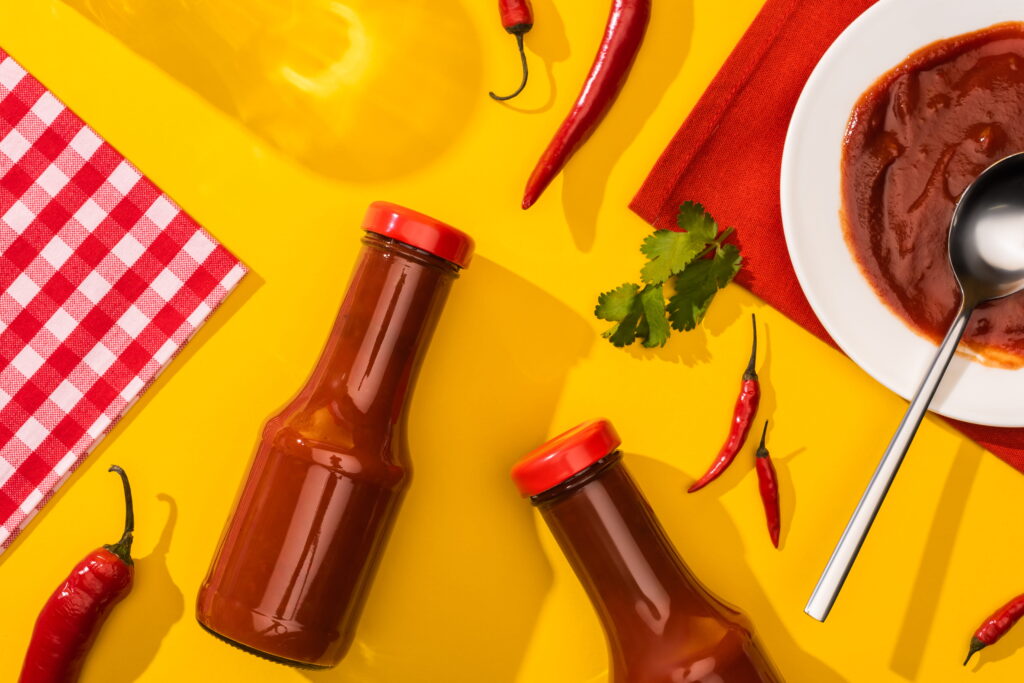
- Premium formats: In sauces and condiments, glass bottles held about 46 percent of the market share in 2024. Glass provides an homage to traditional formats while offering premium appeal, which performs strongly with shoppers.
- Sustainability: In addition to glass, consumers are also gravitating toward large volume packaging like stand-up pouches. These offer higher sauce packaging volumes and drive convenience, a factor that continues to shape purchasing decisions (Euromonitor). After all, higher product volumes mean fewer trips to the grocery store.
- Resealable packaging: Today’s grocery shoppers are looking to save money, reduce food waste, and streamline their weeknight cooking. Resealable formats — bottles, for example — are the ticket here. Take, for example, the ever-present jar of grape jelly in your fridge. By packaging the same product in a resealable bottle, brands can reduce waste, control product delivery, and align with the consumer desire for convenient, mess-free meal prep.
- Single-serves for convenience meals: On the opposite end of the spectrum, we have single-serve packaging options, which reduce waste in their own way. Picks like single-serve pouches and dip cups are highly desirable for single-person households, grocery shoppers on the go, or health-conscious shoppers watching their portion sizes. They’re also a great choice for ready meals.
- A thoughtful approach to films: Transparent or branded packaging films can elevate product perception and help consumers make informed buying choices. Ultimately, clear product labeling is the best way to deliver standout dietary information and ingredient transparency. Thoughtful packaging films help product labels take center stage.
Foodservice and Industrial Formats: Convenience and Waste Reduction
Labor management and product consistency are both essential factors in the foodservice business. By offering sauces packaged specifically for foodservice applications, sauce manufacturers like Giraffe Foods can help customers reduce back-of-house prep time, cut down on waste, and keep kitchens consistent. Those might look like the following:
- Sachets, portion pouches, and dip cups: These options help achieve masterful portion control in foodservice settings.
- Pillow pouches: These fully customizable pouches can help streamline back-of-house efficiencies with precisely calibrated measurements.
- Bulk pails, jugs, and bags: Like pouches, each of these formats can improve back-of-house efficiencies by limiting labor costs and reducing the possibility of product quality deviation.
Meanwhile, in high-volume operations like industrial settings, larger packaging formats like drums, pails, and totes are an obvious choice. These formats help with cost-efficient bulk logistics; they also help ensure shelf-stability in industrial settings. These large-format packaging options also offer seamless integration into factory processes like bulk marination or batching.
Picking Packaging That Sells
Packaging isn’t just a practical necessity for product transport and shelf stability. It’s a feature driving buyer behavior in a major way.
The packaging experts at Giraffe Foods can evaluate your unique product applications and suggest packaging options based on your brand’s unique goals. Our custom sauces are manufactured and packed with careful attention to shelf-life requirements, specific applications, and storage conditions, and then shipped hassle-free in diverse packaging formats. That includes pouches, pails, jugs, sachets, bags, bottles, glass jars, dip cups, and everything in between. Our solutions help brands stand out in crowded aisles, foodservice marketplaces, and our current era of never-ending industrial innovation. They also support visibility for specialty products through strategic label call-outs and certifications like vegan, gluten-free, kosher, or halal.
After all, packaging is far from one-size-fits-all.